-
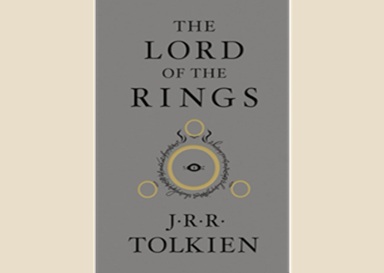
The Lord of The Rings by J.R.R. Tolkien
You’ve probably seen the movies but have you actually read these books? With so many fantasy options out there today, why not read one of the best series out there. If you’re new to reading fantasy we cannot recommend a better book series to start with. Or, if you’re already an avid fantasy reader, your…
-
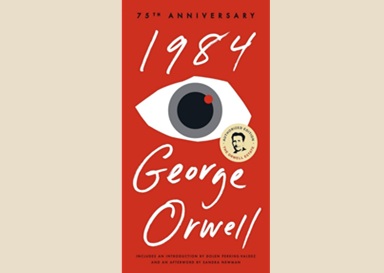
1984 by George Orwell
This book is key to understanding the end game of all those whose goal it is to take over the world. Eric Blair was an insider of the early 20th century democratic socialist movement. After being a member of this nefarious group, Blair defected and published this and other books under the pen name, George…
-
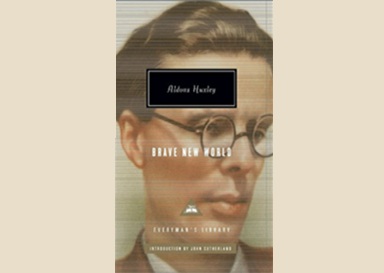
Brave New World by Aldous Huxley
Brave New World is not just some fanciful literary wordplay musing about what a supposed dystopia might look like. Huxley associated with some of the leading social engineers of his day. It’s hard to tell if Huxley was trying to warn us or purposefully bringing his peers’ vision into the social consciousness. Either way, Brave…
-
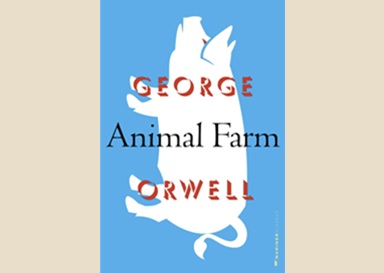
Animal Farm by George Orwell
An allegory of the Russian Revolution, Animal Farm outlines the dangers of communism in a way that the average person can understand. This is an easy read, great for anyone, young or old. Gain critical insight into how idealism and the spirit of revolution can devolve into totalitarianism and oppression.
-

The Space Trilogy by C.S. Lewis
Out of the Silent Planet reads like an early sci-fi serial. A fun read, Lewis takes the reader to the mysterious planet, Malacandra. A strange world with strange creatures where certain philosophical and theological themes are explored. In the sequel, the reader is taken to Perelandra, an even stranger planet where the only inhabitants are…
-

Crime and Punishment by Fyodor Dostoevsky
Not just a murder mystery, but a true literary masterpiece that everyone should read at least once in their life. At its core this book explores deep themes such as human redemption and the dangers of nihilism. A Forest Bookstore “Must Read.”
-

Trivium by John Michell et al.
They say the only kind of education is self-education and if you’re on the path of self-education this book isn’t a bad place to start. Learn the foundations of grammar, logic and rhetoric; classical subjects that our modern day education system no longer emphasizes. The trivium refers to the three liberal arts considered in classical…
-
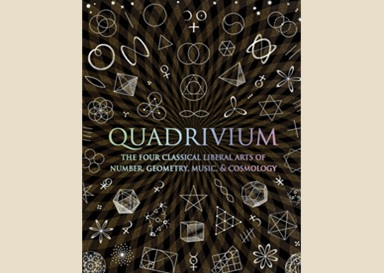
Quadrivium by Miranda Lundy et al.
The follow up to Trivium. The quadrivium-the classical curriculum-comprises the four liberal arts of number, geometry, music, and cosmology. It was studied from antiquity to the Renaissance as a way of glimpsing the nature of reality. Geometry is number in space; music is number in time; and cosmology expresses number in space and time. Number,…
-

The True Story of the Bilderberg Group by Daniel Estulin
Delving into a world once shrouded in complete mystery and impenetrable security, this investigative report provides a fascinating account of the annual meetings of the world’s most powerful people—the Bilderberg Group. Since its inception in 1954 at the Bilderberg Hotel in the small Dutch town of Oosterbeek, the Bilderberg Group has been comprised of European…
-

Shadow Masters by Daniel Estulin
This investigation examines how behind-the-scenes collaboration between governments, intelligence services and drug traffickers has lined the pockets of big business and Western banks. Beginning with a last-minute request from ex-governor Jesse Ventura, the narrative winds between the author’s own story of covering “deep politics” and the facts he has uncovered. The ongoing campaign against Victor…
-
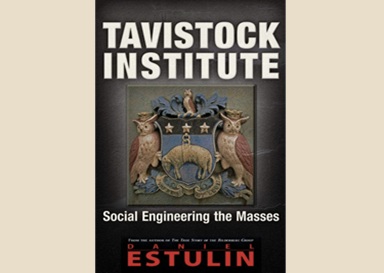
Tavistock Institute: Social Engineering the Masses by Daniel Estulin
The Tavistock Institute, in Sussex, England, describes itself as a nonprofit charity that applies social science to contemporary issues and problems. But this book posits that it is the world’s center for mass brainwashing and social engineering activities. It grew from a somewhat crude beginning at Wellington House into a sophisticated organization that was to…
-

The Creature from Jekyll Island by G. Edward Griffin
This is the classic exposé of the Fed that has become one of the best-selling books in its category of all time. Where does money come from? Where does it go? Who makes it? The money magician’s secrets are unveiled. Here is a close look at their mirrors and smoke machines, the pulleys, cogs, and…
-

The Great Reset: And the War for the World by Alex Jones
If you really want to know what’s happening in the world, this is the one book you must read now. Alex Jones is the most censored man on the planet and you should ask yourself why that is. There is a powerful authoritarian takeover in process that is seeking to capture the entire human system…
-

The Great Awakening by Alex Jones
Working with New York Times bestselling author Kent Heckenlively, Jones masterfully gives you the deeper discussion about such hot button topics as the truth behind the globalists plans for artificial intelligence (AI), the central bank digital currency, social credit scores, Big Tech tyranny, censorship, fifteen-minute cities, the unholy alliance between big business and big government, the military-intelligence-industrial…
-

The Real Anthony Fauci by Robert F. Kennedy Jr.
During more than a year of painstaking and meticulous research on his laptop and through interviews, Robert F. Kennedy Jr. unearthed a shocking story that obliterates media spin on Dr. Fauci . . . and that will alarm every American—Democrat or Republican—who cares about democracy, our Constitution, and the future of our children’s health.
-

The Wuhan Cover-Up by Robert F. Kennedy Jr.
“Gain-of-function” experiments are often conducted to deliberately develop highly virulent, easily transmissible pathogens for the stated purpose of developing preemptive vaccines for animal viruses before they jump to humans. More insidious is the “dual use” nature of this research, specifically directed toward bioweapons development. The Wuhan Cover-Up pulls back the curtain on how the US government’s…
-

Conspirators’ Hierarchy: The Story of the Committee of 300 by Dr. John Coleman
Can you imagine an all powerful group, that knows no national boundaries, above the laws of all countries, one that controls every aspect of politics, religion, commerce and industry, banking, insurance, mining, the drug trade, the petroleum industry, a group answerable to no one but its members? To the vast majority of us, such a group…
-

The Tavistock Institute of Human Relations by Dr. John Coleman
The Tavistock Institute for Human Relations has had a profound effect on the moral, spiritual, cultural, political and economic policies of the United States of America and Great Britain. It has been in the front line of the attack on the U.S. Constitution and State Constitutions. No group did more to propagandize the U.S. to…
-

One World Order: Socialist Dictatorship by Dr. John Coleman
The enemy in Washington is more to be feared than the enemy in Moscow. Communism did not destroy tariff protection created by George Washington. Communism did not force the United States to adopt graduated income tax. Communism did not create the Federal Reserve Board. Communism did not force the United Nations on America. Communism did…
-

Hidden History: The Secret Origins of the First World War by Gerry Docherty & Jim Macgregor
Hidden History uniquely exposes those responsible for World War I. It reveals how accounts of the war’s origins have been deliberately falsified to conceal the guilt of the secret cabal of very rich and powerful men in London responsible for the most heinous crime perpetrated on humanity. For 10 years, they plotted the destruction of Germany…
-

Esoteric Hollywood: Sex, Cults and Symbols in Film by Jay Dyer
Like no other title before it, Esoteric Hollywood delves into the deep, dark, and mysterious undertones hidden in Tinseltown’s biggest films. After years of scholarly research, Jay Dyer has compiled his most-read essays, combining philosophy, comparative religion, symbolism, and geopolitics and their connections to cinema. Readers will watch movies with new eyes, able to decipher on their…
-

Esoteric Hollywood II: More Sex, Cults and Symbols in Film by Jay Dyer
Like no other book before it, this work delves into the deep, dark, and mysterious undertones hidden in Tinsel town’s biggest films. Esoteric Hollywood is a game-changer in an arena of tabloid-populated titles. After years of scholarly research, Jay Dyer has compiled his most read essays, combining philosophy, comparative religion, symbolism, and geopolitics and their connections to…
-

Esoteric Hollywood III: Sex, Cults and Apocalypse in Films by Jay Dyer
In Esoteric Hollywood 3: Sex, Cults & Apocalypse in Films, Jay Dyer pulls back the curtain on the deeper, often unsettling themes embedded in modern cinema. From blockbuster franchises to obscure B-movies, Dyer deciphers the esoteric symbolism, intelligence connections, and social engineering tactics hidden within Hollywood’ s most iconic films. With sharp wit and meticulous…
-

Weird Scenes Inside the Canyon: Laurel Canyon, Covert Ops & the Dark Heart of the Hippie Dream by David McGowan & Nick Bryant
Laurel Canyon in the 1960s and early 1970s was a magical place where a dizzying array of musical artists congregated to create much of the music that provided the soundtrack to those turbulent times. Members of bands like the Byrds, Buffalo Springfield, the Monkees, the Beach Boys, the Mamas and the Papas, the Turtles, the…
-

Full Spectrum Dominance: Totalitarian Democracy in the New World Order by F. William Engdahl
If you read Full Spectrum Dominance: Totalitarian Democracy and the New World Order among other important things that you will learn are: + The actual Pentagon strategy, called Full Spectrum Dominance, to insure Washington has supreme military power over any and all potential rivals+ How the US State Department and CIA use Color Revolutions and…
-
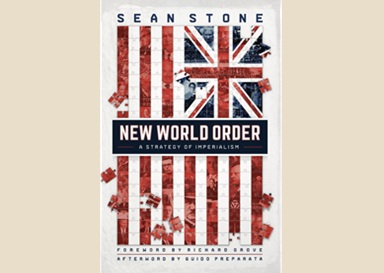
New World Order: A Strategy of Imperialism by Sean Stone
A sweeping overview of world affairs and, especially having come across the name of William Yandell Elliott, Professor of Politics at Harvard through the first half of the 20th century. Sean found that Elliott had created a kindergarten of Anglo-American imperialists amongst his students, who included Henry Kissinger, Zbigniew Brzezinski, Samuel P. Huntington, and McGeorge…
-

The Lost Hegemon: Whom the Gods Would Destroy by F. William Engdahl
If you read The Lost Hegemon you will find out: – How the Pentagon and CIA use radical Islam as an instrument to control world energy – The true history of al Qaeda and its successor Islamic State – How Washington backs a death cult called Muslim Brotherhood to control world oil – The real…
-

Invisible History: Afghanistan’s Untold Story by Paul Fitzgerald and Elizabeth Gould
Despite official declarations, the war in Afghanistan is far from over; in fact, it’s escalating. Seven years after 9/11, the Taliban continue to regroup, attack and claim influence over most of the region. This book presents a fresh, comprehensive analysis of Afghanistan’s political history that begins at the roots of tribal leadership and ultimately emphasizes…
-

Devil’s Game: How the United States Helped Unleash Fundamentalist Islam by Robert Dreyfuss
The first complete account of America’s most dangerous foreign policy miscalculation: sixty years of support for Islamic fundamentalism. Devil’s Game is the gripping story of America’s misguided efforts, stretching across decades, to dominate the strategically vital Middle East by courting and cultivating Islamic fundamentalism. Among all the books about Islam, this is the first comprehensive…
-

Secret Affairs: Britain’s Collusion with Radical Islam by Mark Curtis
The updated edition of Secret Affairs covers the momentous events of the past year in the Middle East. It reveals the unreported attempts by Britain to cultivate relations with the Muslim Brotherhood in Egypt after the fall of Mubarak, the military intervention on the side of Libyan rebel forces which include pro-al-Qaeda elements, and the ongoing reliance…
-

The Present Age: On the Death of Rebellion by Søren Kierkegaard
In The Present Age (1846), Søren Kierkegaard analyzes the philosophical implications of a society dominated by the mass-media. What makes the essay so remarkable is the way it seems to speak directly to our time—i.e. the Information Age—where life is dominated by mere “information” not true “knowledge.” Kierkegaard even goes so far as to say that advertising…
-

The Search for the “Manchurian Candidate” by John Marks
A ‘Manchurian Candidate’ is an unwitting assassin brainwashed and programmed to kill. In this book, former State Department officer John Marks tells the explosive story of the CIA’s highly secret program of experiments in mind control. His curiosity first aroused by information on a puzzling suicide. Marks worked from thousands of pages of newly released…
-
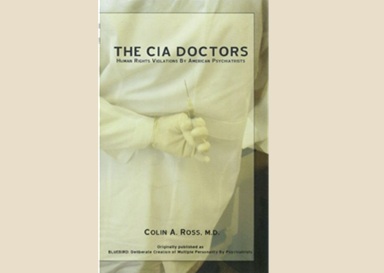
The CIA Doctors: Human Rights Violations by American Psychiatrists by Colin A. Ross, M.D.
The C.I.A. Doctors, uncovers the truth about violations of human rights by American Psychiatrists in the twentieth century. Documents obtained through the Freedom of Information Act and cross-referenced research published in leading medical journals expose the existence of mind altering experiments on unwitting human subjects, paid for by the U.S. government, the U.S. Military and…
-

America’s Secret Establishment by Antony C. Sutton
Breaking 170 years of secrecy, this intriguing exposé takes a behind-the-scenes look at Yale’s mysterious society, the Order of the Skull and Bones, and its prominent members, numbering among them Tafts, Rockefellers, Pillsburys, and Bushes. Explored is how Skull and Bones initiates have become senators, judges, cabinet secretaries, spies, titans of finance and industry, and…
-

Wall Street and the Bolshevik Revolution by Antony C. Sutton
Why did the 1917 American Red Cross Mission to Russia include more financiers than medical doctors? Rather than caring for the victims of war and revolution, its members seemed more intent on negotiating contracts with the Kerensky government and, subsequently, the Bolshevik regime. In a courageous investigation, Antony Sutton establishes tangible historical links between Russian…
-
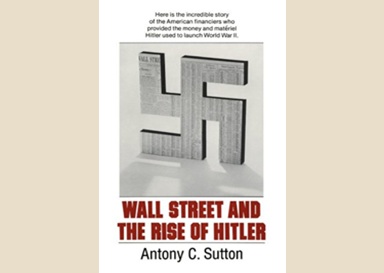
Wall Street and the Rise of Hitler by Antony C. Sutton
Penetrating a cloak of falsehood, deception, and duplicity, Professor Sutton reveals one of the most remarkable and under-reported facts of World War II―that key Wall Street banks and American businesses supported Hitler’s rise to power by financing and trading with Nazi Germany. The other volumes in this trilogy are Wall Street and the Bolshevik Revolution and Wall Street…
-
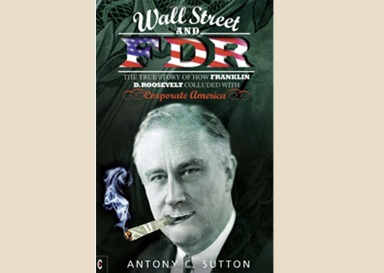
Wall Street and FDR by Antony C. Sutton
Franklin D. Roosevelt is frequently described as one of the greatest presidents in American history, remembered for his leadership during the Great Depression and World War II. Antony Sutton challenges this received wisdom, presenting a controversial but convincing analysis. Based on an extensive study of original documents, he concludes that: • FDR was an elitist…
-

The Anglo-American Establishment by Caroll Quigley
Quigley exposes the secret society’s established in London in 1891, by Cecil Rhodes. Quigley explains how these men worked in union to begin their society to control the world. He explains how all the wars from that time were deliberately created to control the economies of all the nations.
-

Between Two Ages: America’s Role in the Technetronic Era by Zbigniew Brzezinski
Between Two Ages: America’s Role in the Technetronic Era is a 1970 book by Zbigniew Brzezinski that analyzes the impact of technology, particularly electronics, on global society and politics. It argues the world is moving from an industrial age to a “technetronic” one, characterized by technology’s profound influence on culture and psychology. Brzezinski assesses the…
-

The Grand Chessboard: American Primacy And Its Geostrategic Imperatives by Zbigniew Brzezinski
In this seminal work, celebrated political scientist Zbigniew Brzezinski delivers a provocative, revolutionary geostrategy for American preeminence in the twenty-first century. The United States’ crucial task, he argues, is to become the sole political arbiter in Eurasia and prevent the emergence of any rival power threatening our material and diplomatic interests. The Eurasian landmass, home…
-

Hybrid Wars: The Indirect Adaptive Approach To Regime Change by Andrew Korybko
Sputnik International’s political analyst and journalist, Andrew Korybko, just published his first book on “Hybrid Wars: The Indirect Adaptive Approach To Regime Change”. It was reviewed by the Diplomatic Academy of Russia and released with the assistance of the People’s Friendship University of Russia, where Andrew is a member of the expert council for the…
-

The Decline of the West, Two Volumes in One by Oswald Spengler
The Decline of the West by German historian Oswald Spengler, originally published in German as Der Untergang des Abendlandes (Vols. I and II in resp. 1918 and 1922), became an instant success in Germany after its defeat in World War I. Spengler’s description of the end of the Western world and the implication that Germany was part of…
-
Tragedy & Hope: A History of the World in Our Time by Carroll Quigley
Tragedy & Hope: A History of the World in Our Time by Carroll Quigley is the ultimate insider admission of a secret global elite that has impacted nearly every modern historical event. Learn how the Anglo-American banking elite were able to secretly establish and maintain their global power. This massive hardcover book of 1348 pages…
-

Tragedy and Hope 101: The Illusion of Justice, Freedom, and Democracy by Joseph Plummer
Based on the groundbreaking research of respected historian Carroll Quigley, Tragedy and Hope 101 reveals an unimaginably devious political system, skillfully manipulated by a handful of elite, which is undermining freedom and democracy as we know it. The goal of those who control the system, in Quigley’s own words, is to dominate “all habitable portions of the…
-

Wall Street and the Russian Revolution: 1905-1925 by Richard Spence
Wall Street and the Russian Revolution will give readers critical insight into what might be called the “Secret History of the 20th century.” The Russian Revolution, like the war in which it was born, represents the real beginning of the modern world. The book will look not just at the sweep of events, but probe the economic,…
-

Postmodern Imperialism: Geopolitics and the Great Games by Eric Walberg
The game motif is useful as a metaphor for the broader rivalry between nations and economic systems with the rise of imperialism and the pursuit of world power. This game has gone through two major transformations since the days of Russian-British rivalry, with the rise first of Communism and then of Islam as world forces…
-

The Game of Nations by Miles Copeland
The Game of Nations by Miles Copeland is a 1969 book that reveals the secret, “amoral” world of international politics and espionage, using the Middle East as a case study. Based on his experience as a CIA officer and Middle East advisor, Copeland exposes the behind-the-scenes machinations of major powers, including the US, in influencing events…
-
The Scientific Outlook by Bertrand Russell
According to Bertrand Russell, science is knowledge; that which seeks general laws connecting a number of particular facts. It is, he argues, far superior to art, where much of the knowledge is intangible and assumed. In The Scientific Outlook, Russell delivers one of his most important works, exploring the nature and scope of scientific knowledge, the increased…
-

The Impact of Science on Society by Bertrand Russell
Many of the revolutionary effects of science and technology are obvious enough. Bertrand Russell saw in the 1950s that there are also many negative aspects of scientific innovation. Insightful and controversial in equal measure, Russell argues that science offers the world greater well-being than it has ever known, on the condition that prosperity is dispersed;…
-

Meta-Narratives: Essays on Philosophy and Symbolism by Jay Dyer
Jay Dyer, the popular comedian, TV host, and author shares fifteen essays that have never before been published in book form. The essays span a variety of topics, including his thoughts on symbology, apologetics, alchemy, and number theory. In an essay on metaphysics, he argues that with the exception of a few philosophers, it has…
-

Democracy – The God That Failed by Hans-Hermann Hoppe
The core of this book is a systematic treatment of the historic transformation of the West from monarchy to democracy. Revisionist in nature, it reaches the conclusion that monarchy is a lesser evil than democracy, but outlines deficiencies in both. Its methodology is axiomatic-deductive, allowing the writer to derive economic and sociological theorems, and then…
-
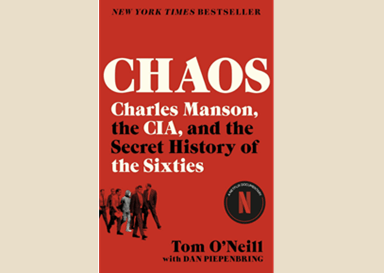
Chaos: Charles Manson, the CIA, and the Secret History of the Sixties by Tom O’Neill
Over two grim nights in Los Angeles, the young followers of Charles Manson murdered seven people, including the actress Sharon Tate, then eight months pregnant. With no mercy and seemingly no motive, the Manson Family followed their leader’s every order — their crimes lit a flame of paranoia across the nation, spelling the end of…
-
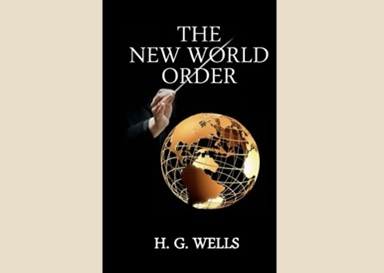
The New World Order by H.G. Wells
One of the central texts in explaining the psychopathic drive of elitists to enslave the world in a unified empire. H. G. Wells was an insider with a British group tasked with revival of their once great empire – this time in conjunction with Venetian Black Nobility Khazar bankers (not mentioned this explicitly in the…
-
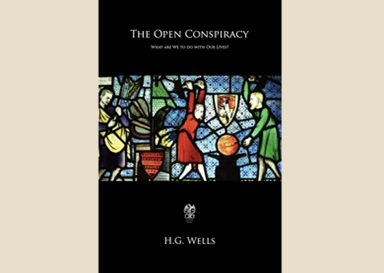
The Open Conspiracy by H.G. Wells
The Open Conspiracy was published in 1928 by H. G. Wells, when he was 62 years old.The book is in his own words a “scheme to thrust forward and establish a human control over the destinies of life and liberate it from its present dangers, uncertainties and miseries.” It propounds that as the result of scientific…
-

The Perennial Philosophy by Aldous Huxley
“The Perennial Philosophy,” Aldous Huxley writes, “may be found among the traditional lore of peoples in every region of the world, and in its fully developed forms it has a place in every one of the higher religions.” With great wit and stunning intellect – drawing on a diverse array of faiths, including Zen Buddhism,…
-
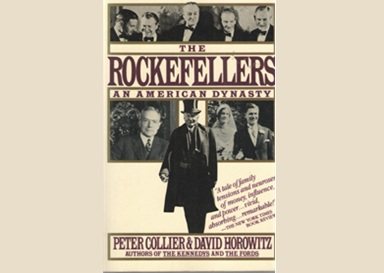
The Rockefellers: An American Dynasty by Peter Collier and David Horowitz
Chronicles the history of the Rockefeller family, focusing on the ruthless accumulation of wealth by John D. Rockefeller Sr., his son’s efforts to use philanthropy to restore the family’s public image, and the subsequent generations’ complex relationships with wealth, power, and privilege. The book explores the impact of immense wealth on individual personality, family tensions,…
-

Technocracy Rising: The Trojan Horse Of Global Transformation by Patrick M. Wood
The dark horse of the New World Order is not Communism, Socialism or Fascism. It is Technocracy. With meticulous detail and an abundance of original research, Patrick M. Wood uses Technocracy Rising to connect the dots of modern globalization in a way that has never been seen before so that the reader can clearly understand the globalization…
-

Epistemology: Becoming Intellectually Virtuous by W. Jay Wood
How do we know what we know? What have wisdom, prudence and studiousness to do with justifying our beliefs? Jay Wood begins this introduction to epistemology by taking an extended look at the idea of knowing within the context of the intellectual virtues. He then surveys current views of foundationalism, epistemic justification and reliabilism. Finally…
-

Trilaterals Over America by Antony C. Sutton
In his 1995 book Trilaterals Over America, economist Antony C. Sutton posits that the Trilateral Commission, established in 1973, operates as a covert and influential entity with significant sway over U.S. and international matters
-
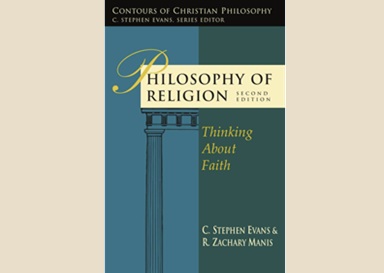
Philosophy of Religion: Thinking About Faith by C. Stephen Evans and R. Zachary Manis
With over 40,000 copies in print since its original publication in 1982, Steve Evans’s Philosophy of Religion has served many generations of students as a classic introduction to the philosophy of religion from a Christian perspective. Over the years the philosophical landscape has changed, and in this new edition Zach Manis joins Evans in a thorough revamping…
-

A History of Philosophy, Vol. 1: Greece and Rome by Frederick Copleston
Conceived originally as a serious presentation of the development of philosophy for Catholic seminary students, Frederick Copleston’s nine-volume A History Of Philosophy has journeyed far beyond the modest purpose of its author to universal acclaim as the best history of philosophy in English. Copleston, an Oxford Jesuit of immense erudition who once tangled with A. J. Ayer in a fabled debate…
-

Lord Milner’s Second War by John P. Cafferky
Anyone with even a passing interest in conspiracy has heard claims that a powerful elite controls both the economies and the politics of the West. Just as surely, almost everyone who has heard these claims has ignored them—the notion of a “secret hand” in world affairs is just too fantastic to believe. Yet, in 2008,…
-

The Republic by Plato
Presented in the form of a dialogue between Socrates and three different interlocutors, it is an inquiry into the notion of a perfect community and the ideal individual within it. During the conversation other questions are raised: what is goodness; what is reality; what is knowledge? The Republic also addresses the purpose of education and the role…
-

Metaphysics by William Hasker
What is ultimately real? What is God like? Do human beings have minds and souls or only brains in bodies? Are humans free agents or are all human acts determined by prior circumstances? Through insightful analysis and careful evaluation, William Hasker helps readers answer these questions and thereby construct a world view to make sense…
-
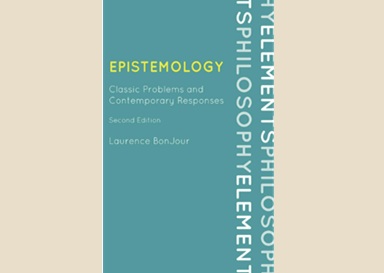
Epistemology by Laurence BonJour
In Epistemology, Laurence Bonjour introduces the serious philosophy student to the history and concepts of epistemology, while simultaneously challenging them to take an active part in its ongoing debates. The text reflects BonJour’s conviction that the place to start any discussion of the theories of knowledge is with the classical problems, beginning with and centered around…
-

Logic by Wesley C. Salmon
Reviews the scope, nature, and applications of the philosophical discipline, focusing on methods for distinguishing between valid and fallacious arguments and inferences.
-
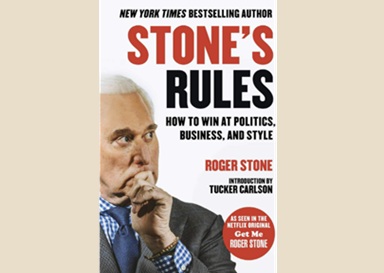
Stone’s Rules by Roger Stone
Here are the lessons of a lifetime of work helping influence America’s politics and culture, learned from working for Richard Nixon and use to help make Donald J. Trump the 45th President of the United States. Roger Stone is a freedom fighter to his admirers, a dirty trickster to his detractors. He is flamboyant, outrageous,…
-

Friendly Fire by Lynn Picknett et al.
Friendly Fire investigates the intrigue and treachery between and within the nations that were ostensibly allies during the Second World War. It asserts that the Allied war effort was more concerned with the balance of power in the postwar world than with the defeat of Germany and Japan. These machinations allegedly prolonged the duration of the…
-

God The Invisible King by H.G. Wells
God the Invisible King by H.G. Wells (1917) is a theological work where Wells lays out his personal, non-orthodox spiritual beliefs, presenting God as a finite, personal, and intimate “Invisible King” or “Invisible Prince” within humanity, distinct from the infinite, distant Creator God of traditional Christianity and its dogmas like the Trinity. Wells critiques established…
-
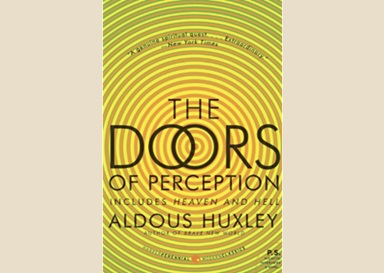
The Doors of Perception by Aldous Huxley
Among the most profound and influential explorations of mind-expanding psychedelic drugs ever written, here are two complete classic books—The Doors of Perception and Heaven and Hell—in which Aldous Huxley, author of Brave New World, reveals the mind’s remote frontiers and the unmapped areas of human consciousness. This edition also features an additional essay, “Drugs That Shape Men’s Minds,” now…
-
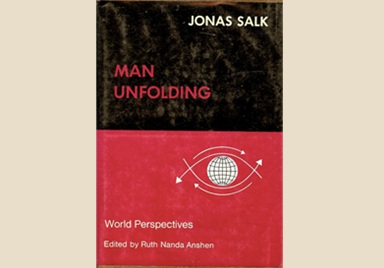
Man Unfolding by Jonas Salk
Man Unfolding proposes applying biological understanding, like that used for the polio vaccine, to solve human problems, advocating for a “theoretical-experimental way of thought” for social issues. Salk argued for a shift from pathology (disease) to health, seeing humanity as a part of a larger whole, and urged a broader view of human behavior and…
-

The Survival of the Wisest by Jonas Salk
The Survival of the Wisest argues humanity faces a critical evolutionary juncture, moving from a focus on individual “fittest” to collective “wisest” survival, where wisdom means choosing actions that promote long-term existence over destructive self-interest. Salk proposes that adapting to planetary limits requires a fundamental shift in values from competition and limitless growth to cooperation,…
-
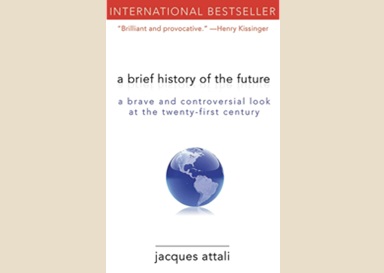
A Brief History of the Future by Jacques Attali
What will planet Earth be like in twenty years? At mid-century? In the year 2100? Prescient and convincing, this book is a must-read for anyone concerned about the future. Never has the world offered more promise for the future and been more fraught with dangers. Attali anticipates an unraveling of American hegemony as transnational corporations…
-
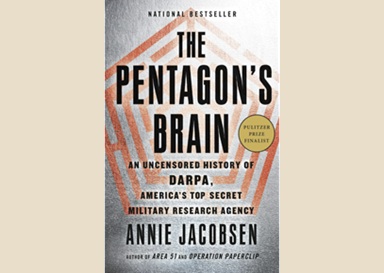
The Pentagon’s Brain by Annie Jacobsen
No one has ever written the history of the Defense Department’s most secret, most powerful, and most controversial military science R&D agency. In the first-ever history about the organization, New York Times bestselling author Annie Jacobsen draws on inside sources, exclusive interviews, private documents, and declassified memos to paint a picture of DARPA, or “the Pentagon’s brain,”…
-
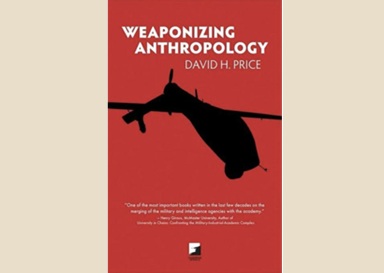
Weaponizing Anthropology by David Price
The ongoing battle for hearts and minds in Iraq and Afghanistan is a military strategy inspired originally by efforts at domestic social control and counterinsurgency in the United States. Weaponizing Anthropology documents how anthropological knowledge and ethnographic methods are harnessed by military and intelligence agencies in post-9/11 America to placate hostile foreign populations. David H.…
-

Soldiers of Reason by Alex Abella
Born in the wake of World War II, RAND quickly became the creator of America’s anti-Soviet nuclear strategy. A magnet for the best and the brightest, its ranks included Cold War luminaries such as Albert Wohlstetter, Bernard Brodie, and Herman Kahn, who arguably saved us from nuclear annihilation and unquestionably created Eisenhower’s “military-industrial complex.” In…
-

Memoirs by David Rockefeller
Born into one of the wealthiest families in America—he was the youngest son of Standard Oil scion John D. Rockefeller, Jr., and the celebrated patron of modern art Abby Aldrich Rockefeller—David Rockefeller has carried his birthright into a distinguished life of his own. His dealings with world leaders from Zhou Enlai and Mikhail Gorbachev to…

 The Forest Bookstore