
Category: Books
-

Trilaterals Over America by Antony C. Sutton
In his 1995 book Trilaterals Over America, economist Antony C. Sutton posits that the Trilateral Commission, established in 1973, operates as a covert and influential entity with significant sway over U.S. and international matters
-

Epistemology: Becoming Intellectually Virtuous by W. Jay Wood
How do we know what we know? What have wisdom, prudence and studiousness to do with justifying our beliefs? Jay Wood begins this introduction to epistemology by taking an extended look at the idea of knowing within the context of the intellectual virtues. He then surveys current views of foundationalism, epistemic justification and reliabilism. Finally…
-

Technocracy Rising: The Trojan Horse Of Global Transformation by Patrick M. Wood
The dark horse of the New World Order is not Communism, Socialism or Fascism. It is Technocracy. With meticulous detail and an abundance of original research, Patrick M. Wood uses Technocracy Rising to connect the dots of modern globalization in a way that has never been seen before so that the reader can clearly understand the globalization…
-
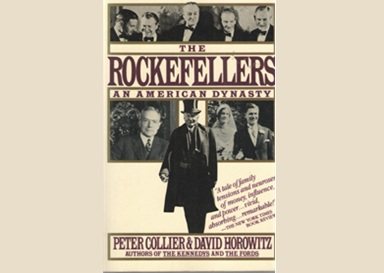
The Rockefellers: An American Dynasty by Peter Collier and David Horowitz
Chronicles the history of the Rockefeller family, focusing on the ruthless accumulation of wealth by John D. Rockefeller Sr., his son’s efforts to use philanthropy to restore the family’s public image, and the subsequent generations’ complex relationships with wealth, power, and privilege. The book explores the impact of immense wealth on individual personality, family tensions,…
-

The Perennial Philosophy by Aldous Huxley
“The Perennial Philosophy,” Aldous Huxley writes, “may be found among the traditional lore of peoples in every region of the world, and in its fully developed forms it has a place in every one of the higher religions.” With great wit and stunning intellect – drawing on a diverse array of faiths, including Zen Buddhism,…
-

The Open Conspiracy by H.G. Wells
The Open Conspiracy was published in 1928 by H. G. Wells, when he was 62 years old.The book is in his own words a “scheme to thrust forward and establish a human control over the destinies of life and liberate it from its present dangers, uncertainties and miseries.” It propounds that as the result of scientific…
-
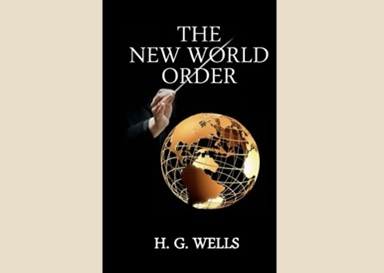
The New World Order by H.G. Wells
One of the central texts in explaining the psychopathic drive of elitists to enslave the world in a unified empire. H. G. Wells was an insider with a British group tasked with revival of their once great empire – this time in conjunction with Venetian Black Nobility Khazar bankers (not mentioned this explicitly in the…
-
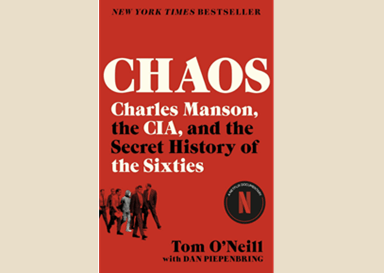
Chaos: Charles Manson, the CIA, and the Secret History of the Sixties by Tom O’Neill
Over two grim nights in Los Angeles, the young followers of Charles Manson murdered seven people, including the actress Sharon Tate, then eight months pregnant. With no mercy and seemingly no motive, the Manson Family followed their leader’s every order — their crimes lit a flame of paranoia across the nation, spelling the end of…
-

Democracy – The God That Failed by Hans-Hermann Hoppe
The core of this book is a systematic treatment of the historic transformation of the West from monarchy to democracy. Revisionist in nature, it reaches the conclusion that monarchy is a lesser evil than democracy, but outlines deficiencies in both. Its methodology is axiomatic-deductive, allowing the writer to derive economic and sociological theorems, and then…
-

Meta-Narratives: Essays on Philosophy and Symbolism by Jay Dyer
Jay Dyer, the popular comedian, TV host, and author shares fifteen essays that have never before been published in book form. The essays span a variety of topics, including his thoughts on symbology, apologetics, alchemy, and number theory. In an essay on metaphysics, he argues that with the exception of a few philosophers, it has…
-

The Impact of Science on Society by Bertrand Russell
Many of the revolutionary effects of science and technology are obvious enough. Bertrand Russell saw in the 1950s that there are also many negative aspects of scientific innovation. Insightful and controversial in equal measure, Russell argues that science offers the world greater well-being than it has ever known, on the condition that prosperity is dispersed;…
-
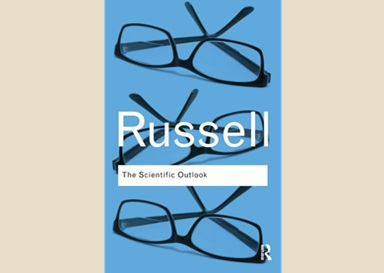
The Scientific Outlook by Bertrand Russell
According to Bertrand Russell, science is knowledge; that which seeks general laws connecting a number of particular facts. It is, he argues, far superior to art, where much of the knowledge is intangible and assumed. In The Scientific Outlook, Russell delivers one of his most important works, exploring the nature and scope of scientific knowledge, the increased…
 The Forest Bookstore