
Tag: Philosophy
-
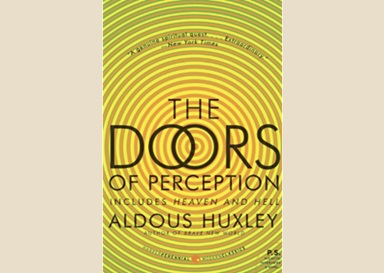
The Doors of Perception by Aldous Huxley
Among the most profound and influential explorations of mind-expanding psychedelic drugs ever written, here are two complete classic books—The Doors of Perception and Heaven and Hell—in which Aldous Huxley, author of Brave New World, reveals the mind’s remote frontiers and the unmapped areas of human consciousness. This edition also features an additional essay, “Drugs That Shape Men’s Minds,” now…
-

God The Invisible King by H.G. Wells
God the Invisible King by H.G. Wells (1917) is a theological work where Wells lays out his personal, non-orthodox spiritual beliefs, presenting God as a finite, personal, and intimate “Invisible King” or “Invisible Prince” within humanity, distinct from the infinite, distant Creator God of traditional Christianity and its dogmas like the Trinity. Wells critiques established…
-

Logic by Wesley C. Salmon
Reviews the scope, nature, and applications of the philosophical discipline, focusing on methods for distinguishing between valid and fallacious arguments and inferences.
-
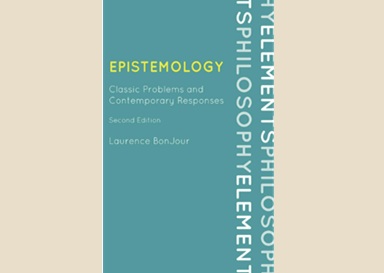
Epistemology by Laurence BonJour
In Epistemology, Laurence Bonjour introduces the serious philosophy student to the history and concepts of epistemology, while simultaneously challenging them to take an active part in its ongoing debates. The text reflects BonJour’s conviction that the place to start any discussion of the theories of knowledge is with the classical problems, beginning with and centered around…
-

Metaphysics by William Hasker
What is ultimately real? What is God like? Do human beings have minds and souls or only brains in bodies? Are humans free agents or are all human acts determined by prior circumstances? Through insightful analysis and careful evaluation, William Hasker helps readers answer these questions and thereby construct a world view to make sense…
-

The Republic by Plato
Presented in the form of a dialogue between Socrates and three different interlocutors, it is an inquiry into the notion of a perfect community and the ideal individual within it. During the conversation other questions are raised: what is goodness; what is reality; what is knowledge? The Republic also addresses the purpose of education and the role…
-

A History of Philosophy, Vol. 1: Greece and Rome by Frederick Copleston
Conceived originally as a serious presentation of the development of philosophy for Catholic seminary students, Frederick Copleston’s nine-volume A History Of Philosophy has journeyed far beyond the modest purpose of its author to universal acclaim as the best history of philosophy in English. Copleston, an Oxford Jesuit of immense erudition who once tangled with A. J. Ayer in a fabled debate…
-
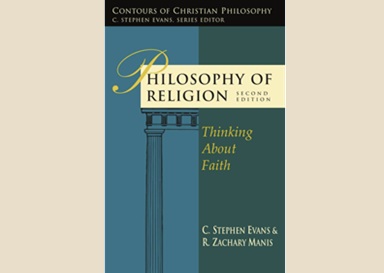
Philosophy of Religion: Thinking About Faith by C. Stephen Evans and R. Zachary Manis
With over 40,000 copies in print since its original publication in 1982, Steve Evans’s Philosophy of Religion has served many generations of students as a classic introduction to the philosophy of religion from a Christian perspective. Over the years the philosophical landscape has changed, and in this new edition Zach Manis joins Evans in a thorough revamping…
-

Epistemology: Becoming Intellectually Virtuous by W. Jay Wood
How do we know what we know? What have wisdom, prudence and studiousness to do with justifying our beliefs? Jay Wood begins this introduction to epistemology by taking an extended look at the idea of knowing within the context of the intellectual virtues. He then surveys current views of foundationalism, epistemic justification and reliabilism. Finally…
-

Meta-Narratives: Essays on Philosophy and Symbolism by Jay Dyer
Jay Dyer, the popular comedian, TV host, and author shares fifteen essays that have never before been published in book form. The essays span a variety of topics, including his thoughts on symbology, apologetics, alchemy, and number theory. In an essay on metaphysics, he argues that with the exception of a few philosophers, it has…
-
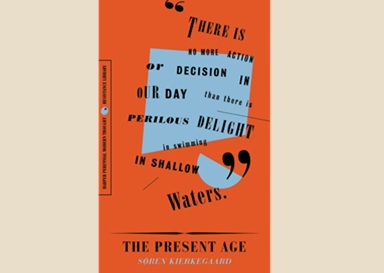
The Present Age: On the Death of Rebellion by Søren Kierkegaard
In The Present Age (1846), Søren Kierkegaard analyzes the philosophical implications of a society dominated by the mass-media. What makes the essay so remarkable is the way it seems to speak directly to our time—i.e. the Information Age—where life is dominated by mere “information” not true “knowledge.” Kierkegaard even goes so far as to say that advertising…
-

Trivium by John Michell et al.
They say the only kind of education is self-education and if you’re on the path of self-education this book isn’t a bad place to start. Learn the foundations of grammar, logic and rhetoric; classical subjects that our modern day education system no longer emphasizes. The trivium refers to the three liberal arts considered in classical…
 The Forest Bookstore